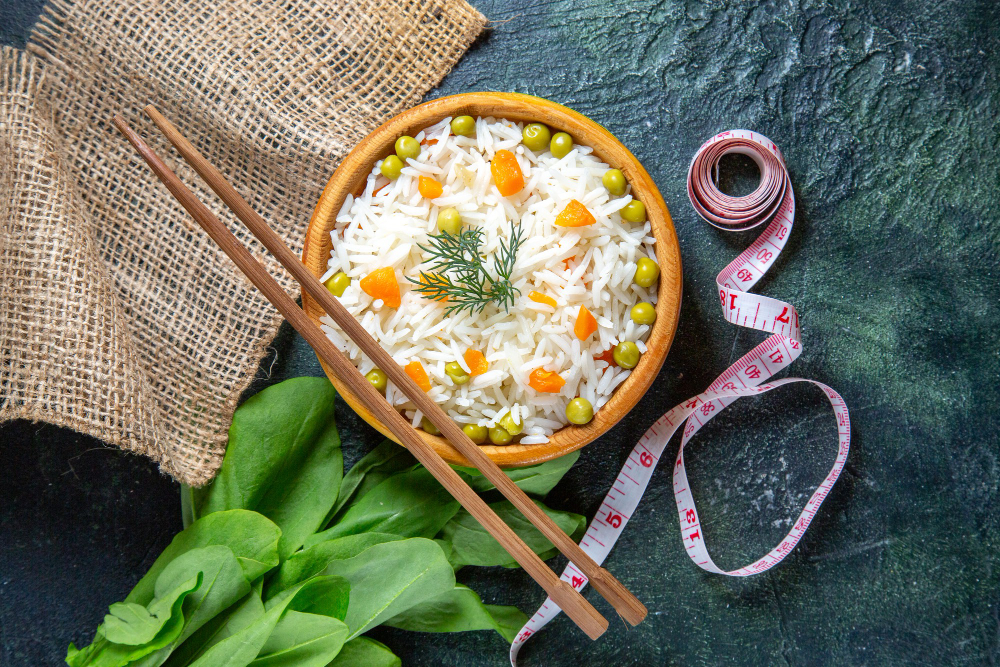
Can white rice be part of a weight loss diet?
White rice is often blamed for weight gain, but in reality, it is not that simple.
White rice is a refined carbohydrate. It gets digested relatively quickly, which means it can raise blood sugar levels faster compared to some other grains. Because of this, you may feel hungry again sooner after eating it, especially if your meal lacks protein or fiber.
However, this does not mean that white rice directly causes weight gain.
Weight gain usually happens when:
- Calorie intake is consistently higher than what the body needs
- Meals are unbalanced
- Physical activity is low
So yes, white rice can still be included in a weight loss diet, but it requires more awareness around portion size and meal combinations.
Does rice cause weight gain?
This is one of the most common concerns.
Rice by itself does not automatically lead to weight gain. It becomes a concern when:
- Portions are too large
- It is eaten without enough protein or fiber
- It leads to frequent hunger and overeating
Because white rice is digested quickly, it may not keep you full for long. This can sometimes lead to snacking or eating more in the next meal.
Over time, these small patterns can make weight management more difficult.
White Rice vs Low GI Rice: Which is better for weight loss?
When comparing rice options for weight loss, the focus should not be on completely eliminating rice but on choosing a type that supports better eating habits.
Regular white rice
Regular white rice has a higher glycemic response. This means:
- It is absorbed quickly
- Energy levels may rise and fall faster
- Hunger may return sooner
This does not make it unhealthy, but it does mean you need to be more mindful with how you eat it.
Low GI rice
Low GI (Glycemic Index) rice is designed or selected to release glucose more slowly into the bloodstream.
Because of this:
- You may feel full for a longer time
- Energy levels tend to feel more stable
- It may help reduce frequent cravings
It is important to understand that low GI rice is not a “weight loss food” on its own. But it can be a more supportive option for people trying to manage their diet consistently.
What is the best rice for fat loss?
There is no single type of rice that guarantees fat loss.
However, certain characteristics can make a difference:
- Slower digestion can help with satiety
- Better portion control becomes easier when you feel full longer
- Stable energy levels may reduce unnecessary snacking
This is where low GI rice can be helpful. It fits more easily into a structured eating pattern without making meals feel restrictive.
How to eat rice without affecting weight loss
Many people struggle not because of rice itself, but because of how it is consumed.
A common pattern is eating a large portion of rice with very little protein or vegetables. This can lead to quicker digestion and reduced satiety.
A more balanced approach would be:
- Moderate portion of rice
- A good serving of dal, paneer, or another protein source
- Vegetables for fiber
This combination slows down digestion and helps you stay full longer.
White rice for weight loss: when does it work?
White rice can still work in a weight loss plan when:
- Portions are controlled
- Meals are balanced
- Overall calorie intake is managed
However, it may require more conscious effort compared to lower GI options.
For someone who prefers a more gradual and steady approach, switching to low GI rice may make it easier to maintain consistency without feeling restricted.
A practical way to look at it
Consider two everyday scenarios.
In one case, a person continues eating large portions of regular white rice, often without enough protein, and feels hungry soon after meals.
In another case, a person switches to low GI rice, slightly reduces portion size, and pairs it with balanced meals.
Both are still eating rice. Nothing extreme has changed.
But over time, the second approach may feel easier to sustain. Hunger is more manageable, and eating patterns become more stable.
This difference may seem small, but it often plays a role in long-term results.