
Best Rice for Growing Children: A Healthy Choice Guide
As parents, we always want to give our children food that supports their growth, energy and overall development. From fresh vegetables to quality grains, every ingredient on their plate plays a part in their daily nutrition.
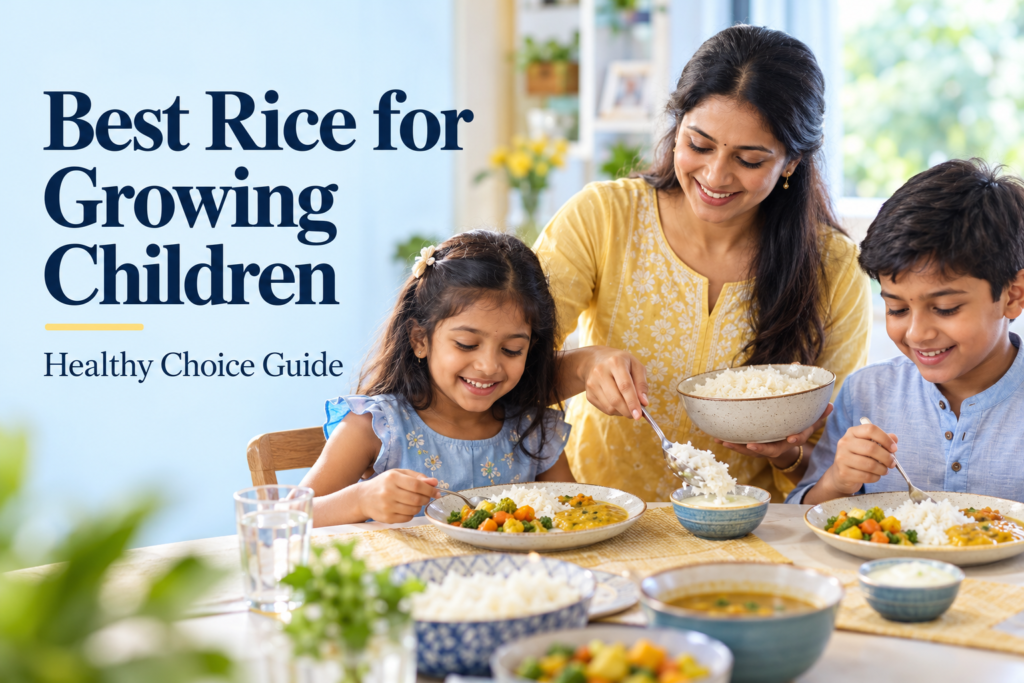
Rice is one of the most common foods in Indian homes and a part of most children’s everyday meals, whether it is comforting dal rice, curd rice, khichdi, pulao or a homemade lunch box. So which is the best rice for kids?
The best rice for growing children is one that gives them steady energy, fits into balanced meals and that the whole family enjoys. That is why more parents are switching to low GI rice, a healthy rice that releases energy slowly and steadily through the day.
In this guide, we explain why rice matters in a child’s diet, what to look for when choosing rice for kids, how low GI rice compares with regular white rice, and easy rice recipes your children will love.
Note: This article is for general information. For babies and toddlers, or any specific health concern, please consult your paediatrician.
Why Rice Is Important in a Child’s Diet
Growing children need enough energy and nutrients to support their physical growth, learning and active play. Rice is a rich source of carbohydrates, the body’s main source of energy, and it pairs easily with almost every Indian dish.
On its own, rice provides energy. Paired with dal, vegetables, curd, eggs or paneer, it becomes a complete, nourishing meal. Here is what a growing child needs from their plate:
| Nutrient | Why Kids Need It | Easy Indian Sources |
|---|---|---|
| Carbohydrates | Energy for school, play and growth | Rice, roti, millets |
| Protein | Building muscles and supporting growth | Dal, rajma, chana, paneer, eggs, curd |
| Fibre | Healthy digestion | Vegetables, dal, fruits |
| Calcium | Strong bones and teeth | Milk, curd, paneer, ragi |
| Iron | Healthy blood and energy levels | Green leafy vegetables, dal, eggs |
Why the type of rice matters today: According to the Comprehensive National Nutrition Survey (2016–18) by the Ministry of Health and Family Welfare, about 1 in 10 school-age children (10.3%) and adolescents (10.4%) in India were found to be prediabetic. Building healthy eating habits early, including smarter carbohydrate choices, gives children a strong start.
What Should Parents Look for When Choosing Rice for Kids?
Not all rice affects the body the same way. When choosing the best rice for your children, look at these four factors:
| What to Look For | Why It Matters for Kids |
|---|---|
| Steady energy release | A lower GI rice releases glucose more gradually, giving children a steadier supply of energy |
| Taste and texture kids enjoy | Children eat better when the rice looks and tastes like the rice they already love |
| Quality and purity | Properly processed, clean, hygienically packed rice from a trusted brand |
| Fits a balanced plate | Rice works best alongside dal, vegetables, curd and protein |
A simple formula for a child-friendly meal: Rice + Dal + Vegetables + Curd = a balanced plate.
Low GI Rice: A Smart Choice for Growing Children
The glycemic index (GI) measures how quickly a carbohydrate food raises blood sugar after eating. Foods with a GI of 55 or below are low GI, 56–69 are medium and 70 or above are high.
Low GI rice is digested more slowly, so it releases energy gradually instead of all at once. For children who spend their day learning, playing and staying active, that steady energy is exactly what a good meal should deliver.
It is also the easiest healthy swap a family can make. Children keep eating the rice dishes they love, and parents get a smarter, more balanced everyday rice. Read more about the health benefits of low GI rice.
White Rice vs Low GI Rice: Which Is Better for Children?
Regular white rice is a familiar part of Indian meals. Low GI rice gives you the same everyday experience with a slower, steadier release of energy. Here is how they compare:
| Feature | Regular White Rice | Low GI Rice by Gatti Fit Grain |
|---|---|---|
| GI value | About 73 (high) | 51 (low) |
| Energy release | Quick | Slow and steady |
| Blood sugar rise | Faster | Gradual |
| Best for | Occasional meals | Everyday family meals and lunch boxes |
White rice GI is the average for boiled white rice from the International Tables of Glycemic Index (2008). Gatti Fit Grain’s GI of 51 is based on Gatti’s product testing.
Want to dig deeper? Read our comparisons of low GI rice vs white rice and low GI rice vs brown rice.
Why Parents Choose Gatti Fit Grain Low GI Rice
Parents want food that is tasty, easy to cook and good for the whole family. Gatti Fit Grain Low GI Rice lets you keep serving rice every day while making a smarter choice for your children.
- Tested GI of 51: slow, steady energy for school and play
- Made for everyday Indian cooking: dal rice, curd rice, khichdi, pulao and lunch boxes
- A simple swap: no need to change your family’s favourite recipes
- One rice for the whole family: it also helps stabilise blood sugar for parents and grandparents
That last point matters in many Indian homes. The same rice that suits your kids works for family members managing insulin resistance, diabetes or PCOS, so you can cook one pot for everyone.
How Much Rice Should Children Eat?
The right amount of rice depends on your child’s age, appetite, activity level and growth needs. Instead of measuring every spoon, focus on a balanced plate.
The ICMR-National Institute of Nutrition’s “My Plate for the Day” recommends that vegetables, fruits and greens make up about half of the day’s food, with the rest coming from cereals, pulses and milk or curd. The 2024 Dietary Guidelines for Indians also advise getting no more than 45% of daily calories from cereals and millets.
| Food Group | Kid-Friendly Examples |
|---|---|
| Vegetables and fruits (about half) | Carrot, beans, peas, palak, cucumber, seasonal fruits |
| Cereals | Low GI rice, roti, ragi, millets |
| Pulses, eggs or paneer | Moong dal, rajma, chana, boiled egg, paneer |
| Milk or curd | Curd, buttermilk, milk |
Active, sporty children may need bigger portions. See can you eat rice if you go to the gym for older, active kids and teens.
Best Rice Recipes for Growing Children
Healthy rice meals do not have to be boring. These easy Indian rice recipes for kids are perfect for home meals and lunch boxes:
| Recipe | What It Adds | Best For |
|---|---|---|
| Dal rice | Energy from rice plus protein from dal | Everyday lunch or dinner |
| Vegetable pulao (carrots, peas, beans, capsicum, corn) | Vitamins, minerals and fibre from vegetables | Lunch boxes and picky eaters |
| Curd rice | Protein and calcium from curd; light and cooling | Hot days and light dinners |
| Khichdi (rice, dal and vegetables) | Carbohydrates, protein and nutrients in one pot | Soft, comforting meals |
| Rajma or chole rice | Plant-based protein and fibre | Filling weekend meals |
Make every one of these with low GI rice for steadier energy, with no change in the recipe.
Tips to Make Rice Meals Healthier for Kids
- Switch to low GI rice for steadier energy.
- Add protein such as dal, curd, eggs or paneer to every rice meal.
- Add colourful vegetables to pulao, khichdi and fried rice.
- Rotate dishes through the week to keep meals interesting.
- Limit fried and highly processed sides like chips and packaged snacks.
For more on how everyday meals affect the gut, read why digestion issues are rising and what your daily meals have to do with it.
Conclusion
The best rice for growing children is about more than taste. It is about steady energy, quality and how well it fits into a balanced plate. Paired with dal, vegetables and curd, rice remains one of the best foods for children’s everyday meals.
Low GI rice by Gatti Fit Grain gives your children slow, steady energy and helps stabilise blood sugar for the whole family, without changing the recipes you love. Buy low GI rice online on Amazon and make healthy rice a daily habit for your family. Curious what changes when you switch? Read what happens when you switch to low GI rice.
A healthy childhood begins with small choices made every day, and choosing the right rice is one of them.
Frequently Asked Questions
Which rice is best for kids?
Low GI rice is the best everyday rice for kids. It releases energy slowly and steadily and fits into all the dishes children already love. Gatti Fit Grain has a tested GI of 51.
Is white rice good for children?
White rice gives quick energy, but its average GI of about 73 is high. For everyday meals, low GI rice is a smarter choice because it releases energy more steadily while tasting like the rice your children already enjoy.
Is brown rice good for kids?
Brown rice has more fibre, but its average GI of about 68 is still in the medium range, and many children do not enjoy its chewier texture. Low GI rice gives you a lower GI with the familiar taste and texture kids prefer.
Can children eat low GI rice?
Yes. Low GI rice is cooked and eaten just like regular rice, so school-age children and the whole family can enjoy it every day. For babies and toddlers, check with your paediatrician first.
Can kids eat rice every day?
Yes. Rice can be part of a child’s daily diet when it is served as part of a balanced plate with dal, vegetables, curd or other protein. Choosing low GI rice makes everyday rice meals even better.
How much rice should a child eat?
It depends on age, appetite and activity. A good guide is to keep vegetables and fruits as about half of the day’s food, with rice and other cereals as a smaller part, alongside dal and curd.
What is the healthiest rice for a kid’s lunch box?
Low GI rice works well in lunch-box favourites like vegetable pulao, lemon rice, curd rice and khichdi. Add vegetables and a protein for a complete, energy-steady meal.
If this guide helped you, we’d love to hear from you. Share your thoughts or questions with us at gattifoods@gmail.com, and we’ll be happy to connect with you.