
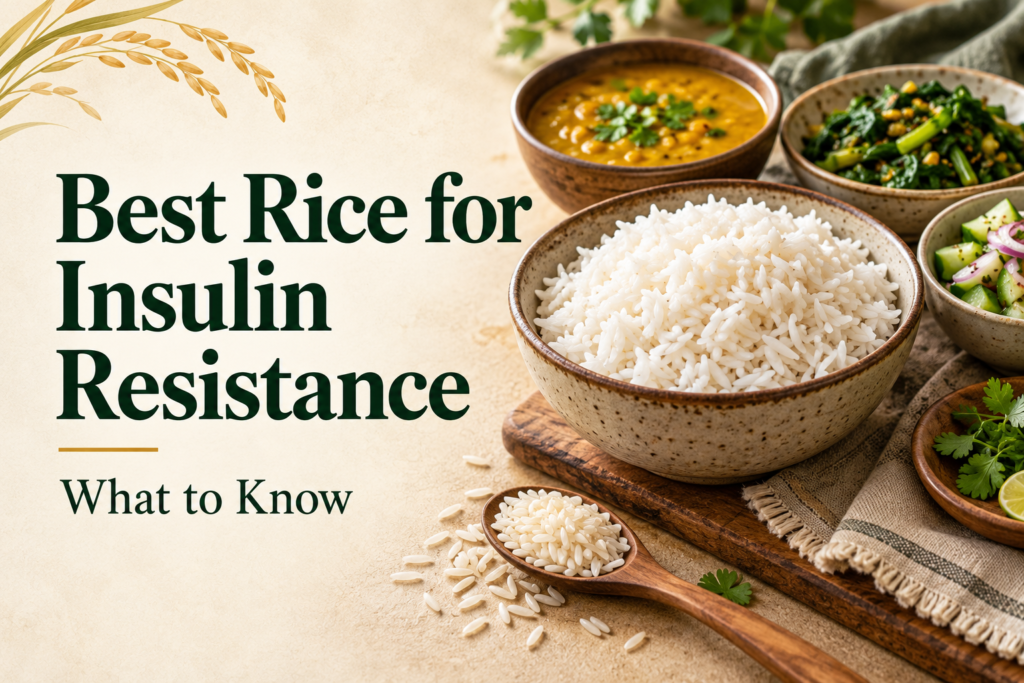
Best Rice for Insulin Resistance: What to Know
Rice is a staple in almost every Indian household. But if you have insulin resistance, or are watching your blood sugar, choosing rice can raise a lot of questions. Should you stop eating rice? Is low GI rice better? And does the amount you eat matter as much as the type?
The good news is that you do not have to give up rice. With the right rice, the right portion and the right pairings, rice can stay a part of your everyday meals.
The best rice for insulin resistance is a low GI rice. Gatti Fit Grain Low GI Rice, with a tested GI of 51, helps stabilise blood sugar after meals, so you can keep enjoying dal-chawal, pulao and curd rice the smart way.
In this guide, we explain what insulin resistance is, its early signs, how different types of rice compare and how to build balanced Indian rice meals for an insulin resistance diet.
Note: This article is for general information. For personal medical advice, please consult your doctor.
What Is Insulin Resistance?
Insulin is a hormone made by the pancreas. It helps glucose move from your bloodstream into your cells, where it is used for energy.
With insulin resistance, your cells respond less effectively to insulin. To make up for it, the pancreas produces more insulin. As long as it can keep up, blood sugar stays in the healthy range. Over time, insulin resistance can lead to prediabetes and type 2 diabetes, which is why catching it early matters.
Why this matters in India: The ICMR-INDIAB study, published in The Lancet Diabetes & Endocrinology in 2023, estimated that 101 million Indians have diabetes (11.4%) and another 136 million have prediabetes (15.3%). Read our guide on whether switching to low GI rice can help with prediabetes.
Excess weight and lack of physical activity are considered major factors behind insulin resistance, along with family history and age. It is also common in women with PCOS (now called PMOS), and in people with conditions such as fatty liver disease and sleep apnea.
Signs of Insulin Resistance
Insulin resistance usually develops quietly. Here are the most common signs and how it is checked:
| Sign | What to Look For |
|---|---|
| Often no symptoms | Many people find out only through a routine blood test |
| Darkened skin patches | Dark, velvety skin on the neck, armpits or groin (acanthosis nigricans) |
| Larger waist size | Over 40 inches in men or 35 inches in women can indicate insulin resistance |
| Blood tests | Fasting blood sugar and HbA1c help your doctor assess blood sugar control |
If you notice any of these signs or have a family history of diabetes, ask your doctor for a blood sugar test.
How Insulin Resistance Affects Your Food Choices
Carbohydrates break down into glucose during digestion, and rice is the main carbohydrate in many Indian meals. That is why the type of rice and the amount you eat make a real difference to your blood sugar.
Carbohydrates are still an important source of energy, so the goal is to choose them smartly, not to cut them out. Low glycemic foods, balanced portions, protein and fibre are the foundation of a good insulin resistance diet.
Everyday Habits for an Insulin Resistance Diet
- Switch your everyday rice to a low GI rice such as Gatti Fit Grain.
- Pair rice with dal, paneer, eggs, fish or chicken at every meal.
- Fill half your plate with vegetables.
- Keep rice to about a quarter of your plate.
- Stay active every day, even with a short walk after meals.
Can You Eat Rice With Insulin Resistance?
Yes, absolutely. Rice can be part of a healthy diet for insulin resistance. What matters is choosing the right rice, keeping portions sensible and building a balanced plate around it.
A large bowl of rice on its own is very different from a moderate serving of low GI rice with dal, vegetables and protein. If rice is part of your daily routine, simply switch to low GI rice and build a better plate around it. You keep the food you love while keeping your blood sugar steadier.
Low GI Rice vs Regular Rice
The glycemic index (GI) ranks carbohydrate foods by how quickly they raise blood sugar compared with a reference food:
| GI Category | GI Value | What It Means |
|---|---|---|
| Low GI | 55 or below | Slower, steadier rise in blood sugar |
| Medium GI | 56–69 | Moderate rise in blood sugar |
| High GI | 70 or above | Faster rise in blood sugar |
Here is how common rice options compare:
| Rice Type | GI Value | GI Category |
|---|---|---|
| White rice, boiled (international average) | 73 | High |
| Brown rice, boiled (international average) | 68 | Medium |
| Gatti Fit Grain Low GI Rice | 51 | Low |
White and brown rice values are averages from the International Tables of Glycemic Index (2008). Gatti Fit Grain’s GI of 51 is based on Gatti’s product testing.
| Factor | Low GI Rice (Gatti Fit Grain) | Regular White Rice |
|---|---|---|
| GI category | Low (51) | High (about 73) |
| Blood sugar rise | Slower and steadier | Faster |
| Best for | Everyday meals with insulin resistance | Smaller, occasional portions |
Want a deeper comparison? Read Low GI Rice vs White Rice: Which Is Better for Blood Sugar? and Low GI Rice vs Brown Rice: Which Is Better?
What Is the Best Rice for Insulin Resistance?
The best rice for insulin resistance is a low GI rice with a tested GI value. It gives you a slower, steadier rise in blood sugar while still letting you enjoy the rice dishes you grew up with.
When you choose rice for an insulin resistance diet, look for:
| What to Look For | Why It Matters |
|---|---|
| A tested low GI value (55 or below) | A specific GI number is more reliable than vague claims like “healthy rice” |
| Everyday cooking | Works in dal-chawal, pulao, khichdi and curd rice without changing recipes |
| Clear product information | Shows the brand stands behind its claims |
| Easy availability | Makes it simple to stick with, meal after meal |
Gatti Fit Grain Low GI Rice ticks every box: a tested GI of 51, made for everyday Indian cooking and easy to order online.
How Much Rice Can You Eat With Insulin Resistance?
The right amount depends on your appetite, activity level and the rest of your meals. An easy way to get it right is the plate method recommended by the American Diabetes Association:
| Part of the Plate | What to Fill It With | Indian Examples |
|---|---|---|
| Half | Non-starchy vegetables | Bhindi, lauki, palak, beans, cabbage, cucumber salad |
| One quarter | Protein foods | Dal, paneer, eggs, fish, chicken, rajma, chana |
| One quarter | Carbohydrate foods | Gatti Fit Grain Low GI Rice, roti, millets |
If you are used to a large bowl of rice, cut down gradually and add more dal and vegetables. A balanced plate keeps you fuller and your energy steadier than a plate that is mostly rice.
If you have diabetes or prediabetes, your doctor can guide you on the right carbohydrate amount. See also: Is Rice Good or Bad for Diabetes?
How to Build a Balanced Rice Meal
Pairing rice with protein and fibre makes every meal more balanced and more filling. Here are easy Indian combinations for an insulin resistance diet:
| Rice Meal | What It Adds | Good For |
|---|---|---|
| Low GI rice + dal + vegetables | Protein and fibre from dal; vitamins and minerals from vegetables | Everyday lunch or dinner |
| Low GI rice + paneer + sabzi | Protein and variety | Vegetarian meals |
| Low GI rice + eggs + vegetables | Protein alongside rice | Quick weekday meals |
| Low GI rice + rajma or chana | Plant-based protein and fibre | Filling weekend lunches |
| Low GI rice + fish or chicken + salad | Lean protein | Non-vegetarian meals |
Why Choose Gatti Fit Grain Low GI Rice?
Gatti Fit Grain Low GI Rice lets you keep rice in your daily meals while making a smarter carbohydrate choice for insulin resistance.
- Tested GI of 51, well within the low GI range
- Helps stabilise blood sugar after meals
- Made for everyday Indian cooking: dal-chawal, pulao, khichdi, curd rice and more
- A simple swap with no need to change your favourite recipes
- Easy to buy: available on Amazon in 2 kg, 5 kg and 10 kg packs
Curious what changes when you make the switch? Read what happens to your body when you switch to low GI rice.
Lifestyle Habits That Improve Insulin Sensitivity
The right rice works best alongside a healthy routine. The good news: insulin resistance responds well to lifestyle change. In the landmark Diabetes Prevention Program, people at high risk who ate healthier, stayed active for about 30 minutes a day and lost 5–7% of their body weight lowered their risk of type 2 diabetes by 58%.
| Habit | How It Helps |
|---|---|
| Move every day | Regular physical activity helps your body use insulin and keep blood sugar in balance |
| Reach a healthy weight | Losing even 5–7% of body weight was a key part of the Diabetes Prevention Program results |
| Choose low GI carbs | Low GI rice like Gatti Fit Grain helps stabilise blood sugar after meals |
| Sleep well | Sleep problems such as sleep apnea are linked to a higher risk of insulin resistance |
| Avoid smoking | Smoking can increase insulin resistance |
Active and training regularly? See Can You Eat Rice If You Go to the Gym? and our guide to rice for weight loss.
Conclusion
You do not need to give up rice to manage insulin resistance. Choose a low GI rice, keep portions sensible and pair it with dal, vegetables and protein, and your everyday meals become more balanced without losing the food you love.
With a tested GI of 51, Gatti Fit Grain Low GI Rice helps stabilise blood sugar after meals, making it the smart everyday rice for anyone with insulin resistance. Order Gatti Fit Grain on Amazon and make the switch today.
Frequently Asked Questions
What is the best rice for insulin resistance?
A low GI rice with a tested GI value is the best everyday choice. Gatti Fit Grain Low GI Rice has a tested GI of 51 and helps stabilise blood sugar after meals.
Is white rice bad for insulin resistance?
Regular boiled white rice has an average GI of about 73, which is high, so it raises blood sugar faster. You do not have to give up rice: switch to a low GI rice like Gatti Fit Grain and pair it with dal, vegetables and protein.
Is brown rice good for insulin resistance?
Brown rice has more fibre than white rice, but its average GI of about 68 is still in the medium range. For a lower GI with the everyday taste of white rice, choose a low GI rice like Gatti Fit Grain, with a GI of 51.
Is basmati rice good for insulin resistance?
The GI of basmati rice varies with the variety and how it is processed and cooked. If you want a consistently low GI, choose a rice with a tested GI value, such as Gatti Fit Grain Low GI Rice (GI 51).
Can insulin resistance be reversed?
Yes, in many people. Eating healthier, moving more and losing weight if needed can help reverse insulin resistance and prevent or delay type 2 diabetes. Switching to low GI rice is an easy first step in your diet.
What are the first signs of insulin resistance?
Insulin resistance often has no symptoms. Some people notice dark, velvety skin patches on the neck or armpits, or a growing waistline. A fasting blood sugar or HbA1c test from your doctor is the surest way to check.
How much rice can I eat with insulin resistance?
A good guide is to keep rice to about a quarter of your plate, with half the plate vegetables and a quarter protein. Choosing low GI rice makes that quarter of your plate even smarter.
If this guide helped you, we’d love to hear from you. Share your thoughts or questions with us at gattifoods@gmail.com, and we’ll be happy to connect with you.