
Low GI Rice During Pregnancy: Benefits and Healthy Eating Guide
Pregnancy is a time when every food choice matters, because it supports both the mother’s health and the baby’s growth. One of the most common questions expecting mothers ask is, “Can I eat rice during pregnancy?”
The answer is yes. Rice is an excellent source of energy, and choosing the right rice makes it even better. Low GI rice releases energy slowly and helps stabilise blood sugar after meals, which makes it a smart everyday choice for balanced pregnancy meals.
In this guide, we explain what low GI rice is, the benefits of low GI rice during pregnancy, the key nutrients expecting mothers need, how low GI rice fits a gestational diabetes diet, and easy Indian meal ideas for every trimester.
Note: This article is for general information. For personal advice during pregnancy, please consult your obstetrician or dietitian.
What Is Low GI Rice?
The glycemic index (GI) measures how quickly carbohydrate foods raise blood sugar after eating:
| GI Range | Category | What It Means |
|---|---|---|
| 55 or below | Low GI | Slow, steady release of energy |
| 56–69 | Medium GI | Moderate release of energy |
| 70 or above | High GI | Quick rise in blood sugar |
Low GI foods are digested more slowly, so glucose enters the bloodstream gradually and gives a steadier supply of energy. Low GI rice by Gatti Fit Grain has a tested GI of 51, compared with an average of about 73 for boiled white rice. Learn more in our guide to the glycemic index of rice.
Can Pregnant Women Eat Low GI Rice?
Yes. Low GI rice is cooked and eaten just like regular rice, so it fits naturally into a healthy pregnancy diet. Your body needs extra energy to support your baby’s growth, especially in the second and third trimesters, and carbohydrates are an important part of meeting that need.
Instead of avoiding rice, choose quality carbohydrates, eat moderate portions and pair rice with protein and fibre. A plate of low GI rice with dal, vegetables, paneer, curd or eggs gives you energy along with essential nutrients for both mother and baby.
8 Benefits of Low GI Rice During Pregnancy
1. Steady, Long-Lasting Energy
Energy needs rise as your baby grows. Low GI rice releases glucose gradually, avoiding the quick spike and slump of high GI rice, so you feel energised for longer after a balanced meal.
2. Helps Stabilise Blood Sugar
Pregnancy hormones change how your body handles carbohydrates. Low GI rice helps stabilise blood sugar after meals, especially when paired with protein and vegetables. See low GI rice and blood sugar.
3. A Smart Choice for Gestational Diabetes Meal Plans
Low GI carbohydrates are a natural fit for gestational diabetes meal plans, because they give a gentler rise in blood sugar after meals. (More on this below.)
4. Satisfying, Balanced Meals
Paired with dal, vegetables, paneer or curd, a low GI rice meal keeps you satisfied between meals and makes healthy eating easier.
5. Makes Nutrient-Rich Meals Easy
Rice is the perfect partner for the foods pregnancy needs most: dal, rajma and chana for protein, curd and paneer for calcium, leafy greens for iron and folate, and eggs, chicken or low-mercury fish for extra protein.
6. Naturally Gluten-Free
Rice is naturally gluten-free, making it a suitable grain for women with coeliac disease or gluten sensitivity.
7. Suits Every Trimester
Simple dishes like khichdi and curd rice work well when appetite is low in the first trimester, balanced rice meals support rising energy needs in the second, and lighter, smaller rice meals suit the third trimester.
8. Supports Healthy Pregnancy Weight Gain
Healthy weight gain is a normal part of pregnancy. Balanced portions of low GI rice with vegetables and protein help you gain within the range your doctor recommends.
Low GI Rice vs Regular White Rice During Pregnancy
| Feature | Low GI Rice by Gatti Fit Grain | Regular White Rice |
|---|---|---|
| GI value | 51 (low) | About 73 (high) |
| Energy release | Slow and steady | Quick |
| Blood sugar response | More gradual | Faster rise |
| Best for | Everyday pregnancy meals | Smaller, occasional portions |
White rice GI is the average for boiled white rice from the International Tables of Glycemic Index (2008). Gatti Fit Grain’s GI of 51 is based on Gatti’s product testing. Read more: low GI rice vs white rice and low GI rice vs brown rice.
Key Nutrients Pregnant Women Need
| Nutrient | Why It Matters | Easy Indian Sources |
|---|---|---|
| Folate | Supports the baby’s brain and spinal cord development | Green leafy vegetables, dal, chana, rajma |
| Iron | Helps prevent anaemia | Palak, methi, dal, rajma, eggs |
| Calcium | Builds strong bones and teeth | Curd, milk, paneer, ragi |
| Protein | Supports the baby’s growth | Dal, paneer, eggs, chicken, fish, chana |
| Fibre | Helps ease constipation | Vegetables, fruits, dal, whole grains |
Why iron matters in India: According to the National Family Health Survey (NFHS-5, 2019–21), 52.2% of pregnant women in India were anaemic. Pairing rice with iron-rich dal and leafy greens, and taking the iron and folic acid supplements your doctor prescribes, helps protect you and your baby.
Is Low GI Rice Good for Gestational Diabetes?
Yes. Gestational diabetes causes higher-than-normal blood sugar during pregnancy and is common in India: a 2024 meta-analysis in BMC Public Health estimated a national prevalence of about 13%. It is usually managed with diet, activity and medical care.
Low GI carbohydrates help stabilise blood sugar after meals. In a randomised trial published in Diabetes Care (2009) of 62 women with gestational diabetes, only 29% of women on a low GI diet needed insulin, compared with 59% on a high GI diet. Switching to low GI rice is one of the simplest ways to bring that approach to an Indian plate.
If you have gestational diabetes, follow your doctor’s meal plan for portions and timing. Read more about rice and diabetes.
How Much Rice Should You Eat During Pregnancy?
Your portion depends on your trimester, weight, activity level and your doctor’s advice. A simple guide that works for most balanced meals:
| Part of the Plate | What to Fill It With | Indian Examples |
|---|---|---|
| Half | Vegetables | Palak, lauki, beans, carrot, cucumber salad |
| One quarter | Protein | Dal, paneer, eggs, chicken, low-mercury fish, rajma |
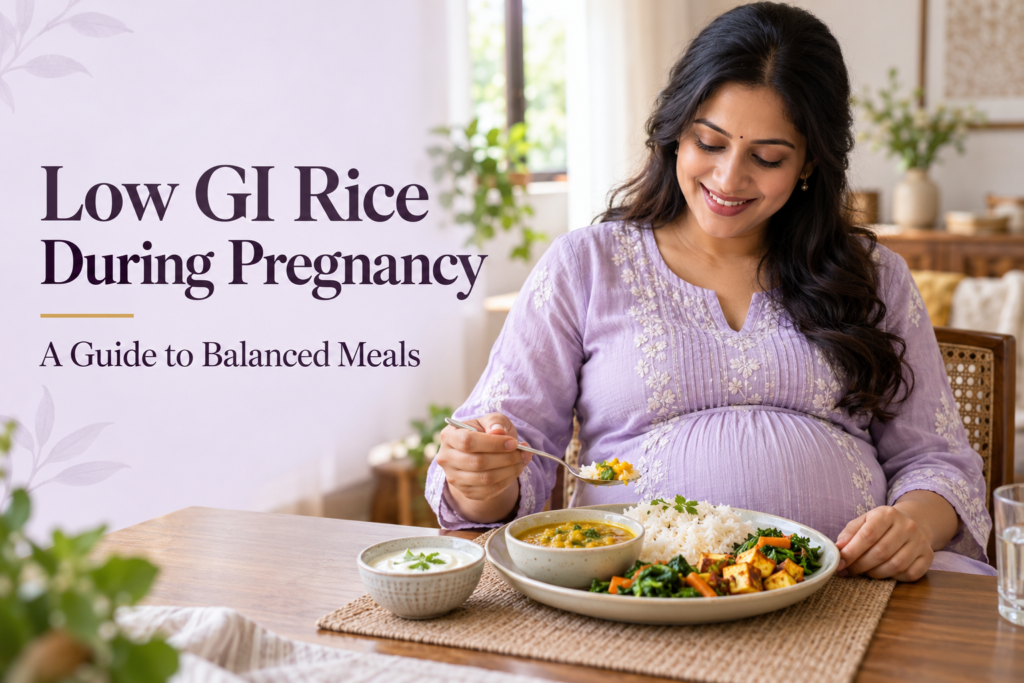
| One quarter | Low GI rice | Plain rice, pulao, khichdi |
| On the side | Calcium | A bowl of curd or a glass of milk |
Healthy Pregnancy Rice Meals
| Meal | Key Nutrients | Best For |
|---|---|---|
| Low GI rice + dal + palak sabzi | Protein, iron, folate | Everyday lunch |
| Low GI curd rice + cucumber | Calcium, protein | Light dinner, hot days |
| Vegetable khichdi with low GI rice | Protein, fibre | Days with low appetite or nausea |
| Low GI rice + rajma or chana | Plant protein, iron, fibre | Filling weekend meal |
| Low GI rice + egg curry + greens | Protein, iron | Quick weekday meal |
| Paneer vegetable pulao | Protein, calcium | Easy lunch box |
Rice Food Safety During Pregnancy
- Eat rice freshly cooked whenever possible.
- Cool leftover rice quickly, ideally within 1 hour, and refrigerate it.
- Eat refrigerated rice within 24 hours.
- Reheat until steaming hot all the way through, and only once.
Food safety guidance from the NHS and Food Standards Scotland. Cooked rice can carry spores of Bacillus cereus, so safe storage matters even more during pregnancy.
Why Choose Gatti Fit Grain Low GI Rice?
- Tested GI of 51, well within the low GI range
- Helps stabilise blood sugar and keeps energy steady after meals
- Soft texture and familiar taste loved by Indian families
- Ideal for everyday dishes like dal rice, khichdi, curd rice, pulao and curries
- One rice for every stage, from PCOS and pregnancy to menopause, and healthy rice for kids once your little one starts eating family meals
- Easy to buy on Amazon in 2 kg, 5 kg and 10 kg packs
Conclusion
Pregnancy is a time for mindful food choices, not for giving up the foods you love. Choose low GI rice, eat balanced portions and pair it with dal, vegetables, curd and protein to build nourishing meals for you and your baby.
Low GI rice by Gatti Fit Grain helps stabilise blood sugar and keeps your energy steady, in every everyday Indian rice dish. Buy low GI rice online on Amazon and make the smart switch for a healthier pregnancy. For more on women’s health, read our guide to the best rice for hormonal balance in women.
Frequently Asked Questions
Can I eat rice during pregnancy?
Yes. Rice is a good source of energy during pregnancy. Choose low GI rice, keep portions moderate and pair it with dal, vegetables, curd and other protein.
Which rice is best during pregnancy?
Low GI rice is the smartest everyday choice. Low GI rice by Gatti Fit Grain has a tested GI of 51, helps stabilise blood sugar after meals and keeps the familiar taste of everyday rice.
Is white rice safe during pregnancy?
Yes, white rice is safe to eat. Its average GI of about 73 is high, though, so low GI rice is a better everyday swap for steadier energy and blood sugar.
Can I eat rice if I have gestational diabetes?
Yes, in portions your doctor recommends. Low GI rice is a smart choice because low GI carbohydrates give a gentler rise in blood sugar after meals.
Is brown rice good during pregnancy?
Brown rice has more fibre, but its average GI of about 68 is still medium. Low GI rice gives you a lower GI of 51 with the soft texture of everyday rice.
How much rice should a pregnant woman eat?
It depends on your trimester, weight and activity. A good guide is about a quarter of your plate as rice, with half vegetables and a quarter protein. Your doctor or dietitian can set the right amount for you.
Is it safe to eat leftover rice during pregnancy?
Fresh rice is best. If you store leftovers, cool them within an hour, refrigerate, eat within 24 hours and reheat until steaming hot, only once.
If this guide helped you, we’d love to hear from you. Share your thoughts or questions with us at gattifoods@gmail.com, and we’ll be happy to connect with you.