
Best Rice for Menopause: A Complete Guide to Healthy Choices for Women
Menopause is a natural stage in every woman’s life, marking the end of the menstrual cycle. While it is a normal transition, it often brings hormonal and physical changes that affect energy, weight, sleep, bone health and overall well-being. That makes a balanced diet more important than ever.
One question many women ask is, “Can I still eat rice during menopause?” The answer is yes. Choose the right rice, keep portions sensible and pair it with nutrient-rich foods, and rice stays a healthy part of your everyday meals.
The best rice for menopause is one that gives steady energy and fits a balanced plate. That is why more women are switching to low GI rice, which releases energy slowly and helps stabilise blood sugar after meals.
In this guide, we explain how menopause changes your nutritional needs, what makes the best rice for menopause, the key nutrients women need in this phase, and easy Indian meal ideas.
Note: This article is for general information. For personal medical advice, please consult your doctor or gynaecologist.
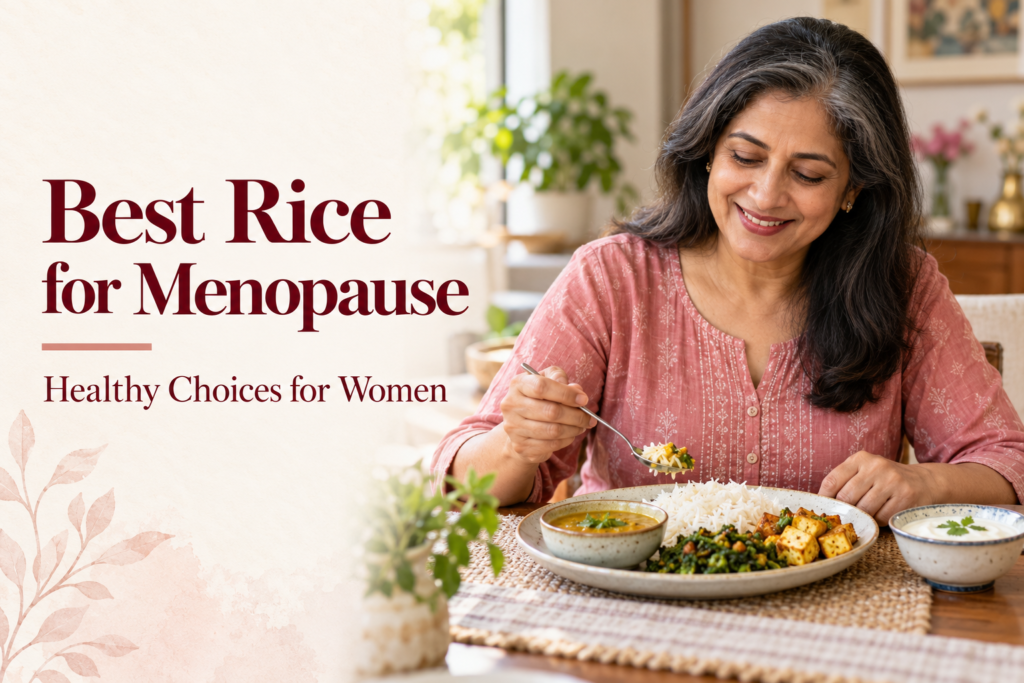
What Is Menopause?
Menopause is the stage when menstrual periods stop permanently because reproductive hormones, especially oestrogen, naturally decline. It is confirmed after 12 months without a period and usually occurs between the ages of 45 and 55. In India, a nationwide survey of over 2,000 women by members of the Indian Menopause Society found an average age at menopause of 46.2 years (Journal of Mid-Life Health, 2016).
Before menopause comes perimenopause, a transition phase in which hormone levels fluctuate and symptoms begin. Common symptoms include:
| Symptom | How It Can Affect Daily Life |
|---|---|
| Hot flashes and night sweats | Disturbed sleep and daytime tiredness |
| Mood changes | Irritability, low mood or anxiety |
| Fatigue and poor sleep | Low energy through the day |
| Weight gain around the abdomen | Changes in body shape and metabolic health |
| Joint discomfort | Stiffness and reduced activity |
| Reduced bone density | Higher risk of weak bones over time |
How Menopause Changes Your Body and Nutritional Needs
As oestrogen falls, the body changes the way it stores fat and handles energy. Research shows that fat tends to shift from the hips and thighs towards the abdomen, and one study cited in a Menopause Review paper found postmenopausal women had about 4.9 times the risk of abdominal obesity compared with premenopausal women. Metabolic syndrome is estimated to affect 31–55% of postmenopausal women.
| Change | What It Means | How Your Plate Can Help |
|---|---|---|
| More abdominal fat | Higher metabolic risk | Sensible portions, protein and fibre at every meal |
| Changes in blood sugar control | Sharper rises after high GI meals | Low GI rice helps stabilise blood sugar |
| Faster bone loss | Weaker bones over time | Calcium-rich curd, milk, paneer and ragi |
| Loss of muscle with age | Lower strength and metabolism | Protein from dal, eggs, paneer, fish and chicken |
| Lower energy | Fatigue during the day | Steady-energy carbs like low GI rice |
Hormonal changes also affect insulin sensitivity for many women. Read more in our guides on insulin resistance and the best rice for hormonal balance in women.
Does the Type of Rice Matter During Menopause?
Yes. Rice is one of India’s most widely eaten staples, but not all rice behaves the same way in the body. The glycemic index (GI) measures how quickly a carbohydrate food raises blood sugar:
| GI Range | Category | What It Means |
|---|---|---|
| 55 or below | Low GI | Slow, steady release of energy |
| 56–69 | Medium GI | Moderate release of energy |
| 70 or above | High GI | Quick rise in blood sugar |
Boiled white rice has an average GI of about 73 (high), while low GI rice by Gatti Fit Grain has a tested GI of 51. Learn more in our complete guide to the glycemic index of rice.
What Makes the Best Rice for Menopause?
| What to Look For | Why It Matters During Menopause |
|---|---|
| A tested low GI value (55 or below) | Releases energy gradually and helps stabilise blood sugar |
| Pairs well with healthy foods | Works with dal, vegetables, paneer, curd, fish and lean protein |
| Everyday cooking quality | Perfect for dal rice, khichdi, pulao and curries |
| Supports portion control | Enjoyed in sensible portions on a balanced plate |
| Familiar taste and texture | Easy to make a long-term habit for the whole family |
6 Benefits of Choosing Low GI Rice During Menopause
1. Steady Energy Through the Day
Fatigue is common during menopause. Low GI rice releases glucose gradually, avoiding the quick spike and slump of high GI rice, so you stay energised for longer after a balanced meal.
2. Helps Stabilise Blood Sugar
Hormonal changes can affect how your body handles carbohydrates. Low GI rice helps stabilise blood sugar after meals, especially when paired with protein and fibre. See low GI rice and blood sugar.
3. Easier Appetite Control
A plate of low GI rice with dal, vegetables or paneer is filling and satisfying, which makes it easier to avoid unnecessary snacking between meals.
4. Supports Healthy Weight Management
Weight gain around the waist is common during menopause. Instead of cutting out rice, switch to low GI rice, measure your portions and fill half your plate with vegetables. Read our guide on losing weight with rice.
5. Pairs Perfectly With Nutrient-Rich Foods
Rice is the natural partner for the foods women need most in this phase: dal and rajma for protein, curd and paneer for calcium, and leafy greens for fibre and minerals.
6. Keeps Home-Cooked Meals on the Menu
Cooking at home gives you control over oil, salt and portions. Low GI rice works in every traditional Indian recipe, so wholesome home meals stay easy.
Key Nutrients Women Need During Menopause
| Nutrient | Why It Matters | Easy Indian Sources |
|---|---|---|
| Protein | Helps maintain muscle strength | Dal, rajma, chana, paneer, eggs, fish, chicken |
| Calcium | Supports bone health as bone loss speeds up | Curd, milk, paneer, ragi, sesame seeds |
| Vitamin D | Helps the body absorb calcium | Morning sunlight, eggs, fish, fortified foods |
| Fibre | Supports digestion and fullness | Vegetables, dal, fruits, whole grains |
| Steady-energy carbohydrates | Keep energy and blood sugar steady | Low GI rice, millets, whole grains |
Your doctor may recommend specific supplements, such as calcium or vitamin D, based on your health and test results.
Low GI Rice vs Regular White Rice
| Feature | Low GI Rice by Gatti Fit Grain | Regular White Rice |
|---|---|---|
| GI value | 51 (low) | About 73 (high) |
| Energy release | Slow and steady | Quick |
| Blood sugar response | More gradual | Faster rise |
| Best for | Everyday meals during menopause | Smaller, occasional portions |
White rice GI is the average for boiled white rice from the International Tables of Glycemic Index (2008). Gatti Fit Grain’s GI of 51 is based on Gatti’s product testing.
Low GI Rice vs Brown Rice for Menopause
| Feature | Low GI Rice by Gatti Fit Grain | Brown Rice |
|---|---|---|
| GI value | 51 (low) | About 68 (medium) |
| Fibre | Lower | Higher (bran layer intact) |
| Taste and texture | Soft, familiar everyday rice | Chewy, nutty |
| Cooking | Cooks like regular rice | Longer cooking time |
Brown rice gives extra fibre, while low GI rice gives you a lower GI with the soft, familiar taste your family already loves, which makes it easier to eat every day. Read more: low GI rice vs brown rice.
Menopause-Friendly Indian Rice Meals
| Meal | Key Nutrients | Why It Works |
|---|---|---|
| Low GI rice + dal + palak sabzi | Protein, fibre, iron | Balanced everyday lunch |
| Low GI curd rice + cucumber salad | Calcium, protein | Light, cooling dinner |
| Vegetable khichdi with low GI rice | Protein, fibre | Comforting one-pot meal |
| Low GI rice + rajma or chana | Plant protein, fibre | Filling weekend meal |
| Low GI rice + fish curry + greens | Protein, omega-3 fats | Heart-friendly non-veg option |
| Paneer vegetable pulao | Protein, calcium | Easy lunch box |
Can Women Eat Rice Every Day During Menopause?
Yes. Rice can be enjoyed every day as part of a balanced diet. A simple guide is the plate method: fill half your plate with vegetables, a quarter with protein such as dal, paneer, eggs or fish, and a quarter with low GI rice.
Simple Daily Habits for Menopause
- Switch your everyday rice to low GI rice.
- Add protein and a calcium-rich food to every meal.
- Fill half your plate with vegetables.
- Stay active with walking, yoga or strength training.
- Prioritise sleep and stay well hydrated.
Why Choose Gatti Fit Grain Low GI Rice?
- Tested GI of 51, well within the low GI range
- Helps stabilise blood sugar and keeps energy steady after meals
- Soft texture and familiar taste preferred by Indian families
- Ideal for everyday recipes like dal rice, khichdi, pulao and curries
- One rice for every woman in the family, from PCOS in younger years to menopause
- Easy to buy on Amazon in 2 kg, 5 kg and 10 kg packs
Conclusion
Menopause brings changing nutritional needs, but it does not mean giving up the foods you love. The best rice for menopause is one that gives steady energy and fits a balanced plate: choose low GI rice, control portions and pair it with protein, calcium-rich foods and vegetables.
Low GI rice by Gatti Fit Grain helps stabilise blood sugar and keeps your energy steady through the day, in every everyday Indian dish. Buy low GI rice online on Amazon and make the smart switch for a healthier menopause.
Frequently Asked Questions
Is rice good during menopause?
Yes. Rice can be part of a healthy menopause diet when you choose low GI rice, keep portions sensible and pair it with vegetables, protein and calcium-rich foods.
Which rice is best for menopause?
Low GI rice is the best everyday choice. Low GI rice by Gatti Fit Grain has a tested GI of 51, helps stabilise blood sugar and keeps the familiar taste of everyday rice.
Does rice cause weight gain during menopause?
Rice on its own does not cause weight gain. Large portions, oily sides and less activity do. Switching to low GI rice, measuring portions and adding protein and vegetables keeps rice part of a healthy plan.
Can I eat white rice during menopause?
Regular boiled white rice has an average GI of about 73, which is high. For everyday meals, low GI rice is a smarter swap because it releases energy more slowly and helps stabilise blood sugar.
Is brown rice good for menopause?
Brown rice has more fibre, but its average GI of about 68 is still medium. Low GI rice gives you a lower GI of 51 with the soft texture of everyday rice.
What should women eat during menopause?
Focus on protein (dal, eggs, paneer, fish), calcium-rich foods (curd, milk, ragi), plenty of vegetables and fibre, and steady-energy carbohydrates like low GI rice.
Does menopause affect blood sugar?
Falling oestrogen can change how the body stores fat and handles blood sugar, and metabolic risk rises after menopause. Choosing low GI carbohydrates and staying active helps. Read about rice and diabetes.
If this guide helped you, we’d love to hear from you. Share your thoughts or questions with us at gattifoods@gmail.com, and we’ll be happy to connect with you.