
Is Low GI Rice Good for PCOS? What Women Should Know
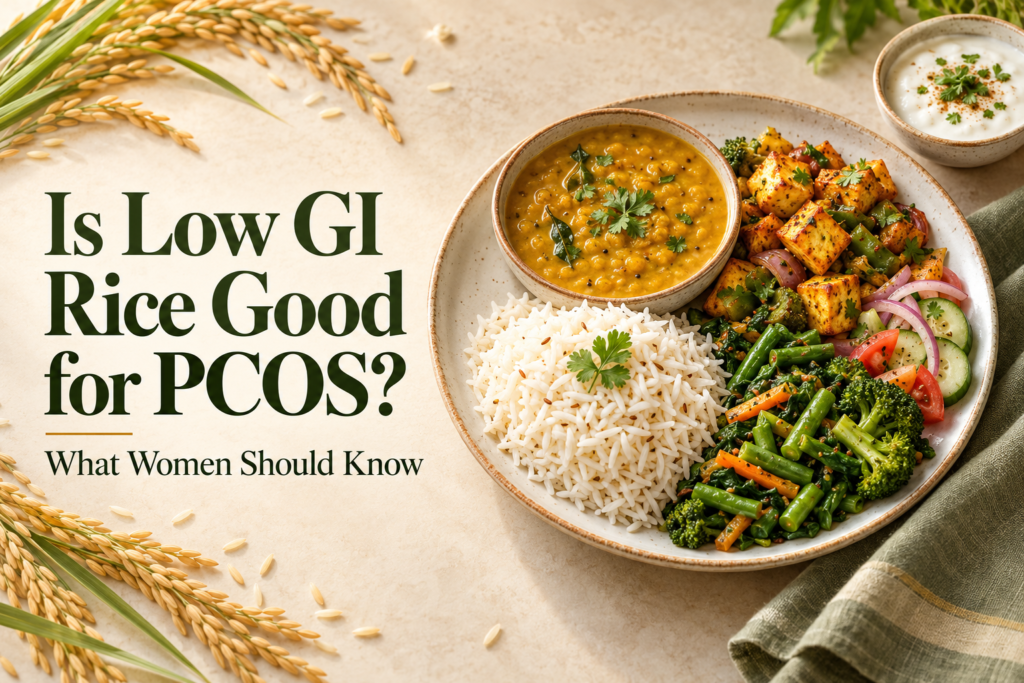
Rice is a regular part of many Indian meals, from dal rice and vegetable pulao to curd rice and homemade lunch boxes. But for women with polycystic ovary syndrome (PCOS), questions about carbohydrates, insulin resistance and blood sugar can make choosing everyday foods confusing.
So, is rice good for PCOS, or do you need to stop eating it? Not necessarily. The type of rice, portion size, cooking method and foods served alongside it all matter when planning balanced meals.
Low GI rice may be an option for women who want to make more informed carbohydrate choices. However, it is important to understand what the glycemic index means and what it can, and cannot, tell you about PCOS.
This guide explains how rice fits into a PCOS diet, how different rice types compare on the glycemic index, how to build balanced Indian rice meals and what to consider when choosing the best rice for PCOS.
Important Disclaimer: This article is for informational purposes only and is not medical advice. PCOS management is highly individual. Please consult your doctor, endocrinologist, or a registered dietitian before making significant dietary changes, especially if you have other health conditions or are on medication.
Understanding PCOS (Now Called PMOS) and Blood Sugar
Polycystic ovary syndrome, commonly called PCOS, is a hormonal condition that can affect menstrual cycles, ovulation, skin, hair growth and fertility. According to the World Health Organization, it affects an estimated 10–13% of women of reproductive age, and up to 70% of women with the condition do not know they have it.
PCOS has a new name. On 12 May 2026, a global consensus published in The Lancet renamed PCOS to polyendocrine metabolic ovarian syndrome (PMOS). The change will be phased in over about three years. We use “PCOS” in this article because it is still the name most people search for. Read our complete guide to PCOS becoming PMOS.
Some women with PCOS also experience insulin resistance, a condition in which the body’s cells respond less effectively to insulin. Insulin helps glucose move from the bloodstream into cells for energy. When insulin resistance is present, the body may need to produce more insulin to maintain blood glucose levels. Insulin resistance is common in PCOS, but not every woman with the condition has the same metabolic profile.
PCOS can affect women differently. Some may experience irregular periods or acne, while others may be concerned about fertility, weight changes or blood glucose levels. Dietary needs can also differ depending on activity levels, health history, food preferences and medical advice.
The 2023 international evidence-based PCOS guideline recommends sustainable healthy eating and physical activity tailored to individual needs and preferences. It does not identify one specific diet composition as superior for all women with PCOS.
For everyday food choices, this means focusing on an overall balanced eating pattern rather than eliminating one food group without a clear reason.
How Low GI Foods Fit into a PCOS Diet
The glycemic index (GI) ranks carbohydrate-containing foods according to how they affect blood glucose compared with a reference food. Foods are generally classified as:
| GI Category | GI Value | What It Generally Means |
|---|---|---|
| Low GI | 55 or below | Slower, more gradual rise in blood glucose |
| Medium GI | 56–69 | Moderate rise in blood glucose |
| High GI | 70 or above | Faster rise in blood glucose |
A low GI food generally produces a slower rise in blood glucose than a high GI food when compared under appropriate testing conditions.
For women with PCOS who are mindful of their blood sugar, choosing a tested lower-GI carbohydrate may be one useful consideration. However, GI is not a complete measure of nutritional quality, and it does not predict the full response to every meal.
Portion size, total carbohydrate intake, cooking method, protein, fibre and individual differences can all affect the response after eating. A meal containing rice, dal and vegetables may affect blood glucose differently from a meal consisting mainly of a large serving of rice.
Low glycemic foods can fit into a balanced PCOS diet, but choosing them does not replace medical care or guarantee improvements in PCOS symptoms. It is more useful to consider GI alongside the nutritional value and overall composition of your meals. For a wider list of foods, see our PMOS diet plan with foods to eat and avoid.
Can You Eat Rice With PCOS?
Yes. Rice can fit into a balanced eating pattern for women with PCOS. There is no universal rule that everyone with PCOS must avoid rice or switch to a particular variety.
What matters is how rice fits into your overall diet. A large serving of rice eaten on its own is different from a moderate serving combined with dal, vegetables and a protein source.
If You Enjoy Rice Regularly, Consider These Habits
- Choose a rice variety that suits your food preferences and nutritional goals.
- Keep portions appropriate for your individual needs.
- Include vegetables, pulses or another source of protein in the same meal.
- Avoid relying on rice alone to make up most of a meal.
- Pay attention to your own response and follow personalised advice if you have blood glucose concerns.
You do not need to follow a restrictive diet simply because you have PCOS. Sustainable food choices that fit your lifestyle are generally more practical than rules that are difficult to maintain.
For example, if rice is part of your regular lunch, you can continue preparing familiar dishes while making adjustments to the overall meal. Adding dal, vegetables or curd may help you create a more varied meal without giving up foods you enjoy.
Low GI Rice vs Regular Rice for PCOS
When comparing rice options, remember that not all rice varieties have the same glycemic index. GI can differ according to the variety, processing and preparation method. It is not accurate to assume that every regular rice variety has a high GI, or that every product labelled as low GI will produce the same response in every person.
Here is how some common options compare, based on published testing:
| Rice Type | Reported GI | GI Category |
|---|---|---|
| White rice, boiled (international average) | 73 | High |
| Brown rice, boiled (international average) | 68 | Medium |
| Low GI Rice by Gatti Fit Grain | 51–52 | Low |
White and brown rice values are averages from the International Tables of Glycemic Index (2008). Individual varieties, brands and cooking methods can give different results.
For a deeper comparison, read Low GI Rice vs White Rice: Which Is Better for Blood Sugar?
A low GI label alone does not tell you everything about a product’s nutritional value. When comparing rice varieties, look at:
| Factor | What to Check |
|---|---|
| GI evidence | Check whether the claimed value is supported by relevant testing. |
| Carbohydrate content | Low GI does not mean low carbohydrate. |
| Serving size | The amount you eat remains important. |
| Processing | Milling and processing can affect the composition of rice. |
| Meal composition | Protein, fibre and other foods can influence the overall response. |
A lower GI value can be one factor in your decision, but it should not be the only one. Taste, cooking performance, affordability and how well a variety fits your regular meals also matter. The goal is not to find a rice variety that independently manages PCOS, but to choose foods that support a balanced eating pattern you can maintain over time.
How Much Rice Can You Eat With PCOS?
There is no single portion size that is right for every woman with PCOS. The amount of rice that fits into a meal depends on energy requirements, activity level, appetite, other foods eaten through the day and individual health needs.
A practical approach is to treat rice as one part of the meal rather than letting it fill the entire plate. A simple visual guide many dietitians use is the plate method recommended by the American Diabetes Association:
| Part of the Plate | What to Fill It With | Indian Examples |
|---|---|---|
| Half | Non-starchy vegetables | Bhindi, lauki, palak, beans, cabbage, cucumber salad |
| One quarter | Protein foods | Dal, paneer, eggs, fish, chicken, rajma, chana |
| One quarter | Carbohydrate foods | Rice, roti, millets |
If you usually eat a large bowl of rice with very few other foods, try adjusting the proportions gradually. You might add more vegetables or dal and serve a portion of rice that suits your appetite. There is no need to make drastic changes overnight.
It can also help to notice how different meals affect your hunger and energy levels. A meal that includes carbohydrates, protein and fibre may feel more satisfying than one made up mostly of rice. Individual experiences vary, so use these observations alongside professional guidance when needed.
If you have been diagnosed with diabetes, prediabetes or another condition affecting blood glucose, a healthcare professional or registered dietitian can help determine an appropriate carbohydrate intake. A low GI label alone cannot establish the right serving size for you. You may also find our guide on whether rice is good or bad for diabetes useful.
How to Build a Balanced Rice Meal
A balanced meal includes more than one carbohydrate source. Pairing rice with protein and fibre-rich vegetables can improve the overall nutritional composition of a meal and help make it more satisfying. Here are some simple Indian combinations for a PCOS-friendly diet:
| Rice Meal | What It Adds | Good For |
|---|---|---|
| Rice + dal + vegetables | Protein and fibre from dal; fibre, vitamins and minerals from vegetables | Everyday lunch or dinner |
| Rice + paneer + salad | Protein and variety | Vegetarian meals |
| Rice + eggs + vegetables | Protein alongside rice | Quick weekday meals |
| Rice + rajma or chana + sabzi | Plant-based protein and fibre | Weekend lunches, meal prep |
| Curd rice + vegetable side | Variety and an added protein source | Lighter meals, hot days |
The best combination depends on your preferences, appetite, nutritional needs and any advice from your healthcare professional.
Choosing the Best Rice for Everyday Meals
When choosing rice for a PCOS-conscious diet, consider more than the name printed on the packet.
Look at the following factors:
- Rice variety — Different varieties can have different starch characteristics.
- GI information — A specific, properly tested GI value is more useful than a vague claim such as “healthy rice.”
- Portion size — Even low GI rice contains carbohydrates.
- Cooking method — Cooking time and texture can affect starch digestibility.
- Meal balance — Vegetables, protein and fibre remain important.
- Product information — Check the variety name, nutrition label and supplier details.
A lower-GI variety may be worth considering if you regularly eat rice and want another option for your carbohydrate choices. It should still be eaten in an appropriate portion as part of a varied diet. If you are also thinking about hormones more broadly, see our guide to the best rice for hormonal balance in women.
You can also compare products based on taste, availability, cooking instructions and price. Choosing a variety that works well with your usual recipes can make it easier to maintain consistent eating habits.
Is Gatti Fit Grain Low GI Rice an Option?
Gatti Fit Grain Low GI Rice is Gatti’s low GI rice, made for families who want to keep rice in their everyday meals while making more mindful carbohydrate choices. As a low GI rice, it is generally associated with a slower, more gradual rise in blood glucose than high GI rice, when compared under standard testing conditions.
However, the GI of a specific prepared meal can vary with cooking and other factors, and an individual’s response may differ.
Women considering Gatti Fit Grain Low GI Rice can evaluate it as one possible rice choice alongside portion size, meal composition, taste and personal nutritional needs. It is available on Amazon in 2 kg, 5 kg and 10 kg packs.
Other Lifestyle Factors to Consider With PCOS
Food choices are one part of PCOS management, but they are not the only consideration. Regular physical activity, adequate sleep, stress management and appropriate medical follow-up can also contribute to overall wellbeing.
You do not need to follow an extreme exercise routine or a highly restrictive diet to make changes to your lifestyle. Choose activities you can maintain, such as walking, cycling, strength training or another form of movement you enjoy.
Sleep and stress can also influence daily routines, appetite and energy levels. Building consistent habits may be more realistic than trying to change everything at once.
If you are experiencing irregular periods, persistent symptoms or concerns about insulin resistance, speak with a qualified healthcare professional. They can assess your individual needs and discuss appropriate monitoring or treatment.
Remember that PCOS is a varied condition. A dietary approach that works for one woman may not be suitable for another, so avoid relying on social media claims or single foods as solutions.
Conclusion
Women with PCOS do not necessarily need to give up rice. Choosing a suitable variety, eating appropriate portions and combining rice with protein and fibre-rich vegetables can help make everyday meals more balanced.
Low GI rice may be one option for women who are mindful of carbohydrate choices, but it is not a treatment for PCOS and does not guarantee a particular blood glucose response. Gatti Fit Grain Low GI Rice is an option to consider as part of a varied diet, and you can order it on Amazon.
The most useful approach is to focus on sustainable eating habits, balanced meals and advice suited to your individual needs. If you have concerns about PCOS, insulin resistance or blood glucose management, consult a qualified healthcare professional.
Frequently Asked Questions
Can I eat white rice with PCOS?
Yes, in moderate portions as part of a balanced meal. Regular boiled white rice has an average GI of about 73, which is in the high range, so portion size and pairing it with dal, vegetables and protein matter more. Some women also choose a tested lower-GI variety for everyday meals.
Which rice is best for PCOS?
Low Gi rice by Gatti Fit Grain is best rice for PCOS. A tested low GI variety, or brown rice for extra fibre, may suit some women better than regular polished white rice. The right choice is one you enjoy, can eat in sensible portions and can keep up over time.
Is brown rice better than white rice for PCOS?
Brown rice keeps its bran, so it has more fibre than white rice, and its average GI (about 68) is slightly lower than white rice (about 73). It is still in the medium-GI range, so portion size and meal balance remain important.
Can I eat rice every day if I have PCOS?
Many Indian women eat rice daily, and it can fit into a PCOS diet when portions are moderate and meals include vegetables and protein. If you have diabetes, prediabetes or insulin resistance, ask your doctor or dietitian how much carbohydrate suits you.
Is low GI rice good for weight loss with PCOS?
No single food causes weight loss. Total food intake, portion sizes, activity and sleep matter more. Low GI rice can be part of a weight-management plan, but it still contains carbohydrates and calories. Read more in our guide to white rice and weight loss.
Can diet cure PCOS?
No. According to the World Health Organization, PCOS is a chronic condition with no cure, but lifestyle changes, medication and fertility treatments can help manage symptoms. A balanced diet supports overall health but does not replace medical care.
Is PCOS now called PMOS?
Yes. In May 2026, a global consensus published in The Lancet renamed PCOS to polyendocrine metabolic ovarian syndrome (PMOS). The new name will be phased in over about three years. Learn more about the change.
If this guide helped you feel more informed, we’d love to hear from you. Share your thoughts or questions with us at gattifoods@gmail.com, and we’ll be happy to connect with you.