
Losing Weight with Rice: Smart Guide to Healthy Eating
For years, rice has been blamed as one of the biggest reasons behind weight gain. Many people trying to lose weight cut rice out completely and replace it with salads, oats or other grains. But is rice really the problem?
The answer is no. Weight loss comes from a calorie deficit, balanced meals, regular activity and food that keeps you satisfied. The type of rice you choose, how much you eat and what you pair it with matter far more than whether rice is on your plate.
That is why more health-conscious families are switching to low GI rice. It releases energy slowly and helps stabilise blood sugar, so you can keep enjoying dal-chawal and pulao while you work towards your weight goals.
In this guide, we cover how rice fits into a weight-loss diet, why rice gets a bad reputation, how to build the perfect weight-loss plate, the mistakes that slow you down and how to choose the best rice for weight loss.
Note: This article is for general information. For a personalised weight-loss plan, please consult your doctor or dietitian.
Can You Really Lose Weight While Eating Rice?
Absolutely. Rice is a daily staple in Japan, yet Japan has the lowest adult obesity rate among OECD countries: just 3.7%, compared with an OECD average of 19.5% and 38.2% in the United States (OECD Obesity Update, 2017). The difference is the overall eating pattern: sensible portions, plenty of vegetables, fish and soups, and an active lifestyle.
Healthy weight management depends on:
| Factor | Why It Matters |
|---|---|
| Total calorie intake | Weight loss happens when you burn more calories than you eat |
| Portion control | The amount of rice and oil on your plate decides most of the calories |
| Meal quality | Protein, fibre and vegetables keep you satisfied |
| Physical activity | Burns calories and helps your body use glucose |
| Sleep and stress | Both affect appetite and cravings |
Rice fits comfortably into a calorie-controlled diet when you get these basics right.
Why this matters in India: The ICMR-INDIAB study (The Lancet Diabetes & Endocrinology, 2023) estimated that about 254 million Indians live with generalised obesity and 351 million with abdominal obesity. Smarter everyday staples, including the rice we eat, are one of the easiest places to start.
Why Rice Gets a Bad Reputation
Rice is often blamed for calories that actually come from what is cooked with it or served alongside it:
| Food | Where the Extra Calories Come From |
|---|---|
| Fried rice | Oil used for frying |
| Rich biryani | Ghee, butter and oil |
| Creamy curries | Cream, butter and oil |
| Sugary drinks with meals | Added sugar |
| Large restaurant portions | Oversized servings |
To put it in perspective: one cup of plain cooked white rice has about 205 calories, while just one tablespoon of ghee adds about 112 calories. Two or three spoons of ghee or oil can add more calories than the rice itself.
What Is the Glycemic Index (GI)?
The glycemic index (GI) measures how quickly carbohydrate foods raise blood sugar:
| GI Range | Category | What It Means |
|---|---|---|
| 55 or below | Low GI | Slow, steady release of energy |
| 56–69 | Medium GI | Moderate release of energy |
| 70 or above | High GI | Quick rise in blood sugar |
Boiled white rice has an average GI of about 73 (high), while low GI rice by Gatti Fit Grain has a tested GI of 51. Learn more in our guide to the glycemic index of rice.
Why Low GI Rice Is a Smart Choice for Weight Management
Not all rice affects your body the same way. Regular white rice is digested quickly, while low GI rice releases glucose slowly and steadily. Here is why that helps when you are managing your weight:
1. Steadier Blood Sugar, Fewer Hunger Dips
Big swings in blood sugar can leave you hungry soon after a meal. In a 2021 study of more than 1,000 people published in Nature Metabolism (the PREDICT study), people whose blood sugar dipped sharply a few hours after eating felt about 9% hungrier and ate around 312 more calories over the day. Low GI rice helps stabilise blood sugar after meals. See low GI rice and blood sugar.
2. Steady Energy Through the Day
Instead of a quick burst of energy followed by a slump, low GI rice delivers carbohydrates gradually, keeping your energy steady for work, workouts and daily activities.
3. Easier Appetite Control
Paired with protein and fibre, a low GI rice meal is filling and satisfying, which makes it easier to skip the mid-afternoon snack and avoid second servings.
4. No Need to Give Up the Food You Love
Diets fail when they are hard to stick to. With low GI rice, you keep eating dal-chawal, pulao, khichdi and curd rice, which makes healthy eating far easier to maintain for the long term.
For a direct comparison, read low GI rice vs white rice for weight loss.
The Science Behind Weight Loss
Weight loss happens when calories burned are greater than calories consumed. The foods that make this easier are the ones that keep you full, steady and satisfied:
- Protein at every meal (dal, paneer, eggs, fish, chicken)
- Fibre-rich vegetables and pulses
- Low GI carbohydrates such as low GI rice
- Regular activity and consistency
The payoff goes beyond the scale. In the landmark Diabetes Prevention Program, people at high risk who lost 5–7% of their body weight through diet and activity lowered their risk of type 2 diabetes by 58%. Read more on low GI rice and prediabetes.
Why Portion Size Matters
A practical guide for most adults trying to lose weight is ½ to 1 cup of cooked rice per meal (about 100 to 205 calories), depending on your calorie needs and activity level. Measure your rice with a katori or cup instead of estimating.
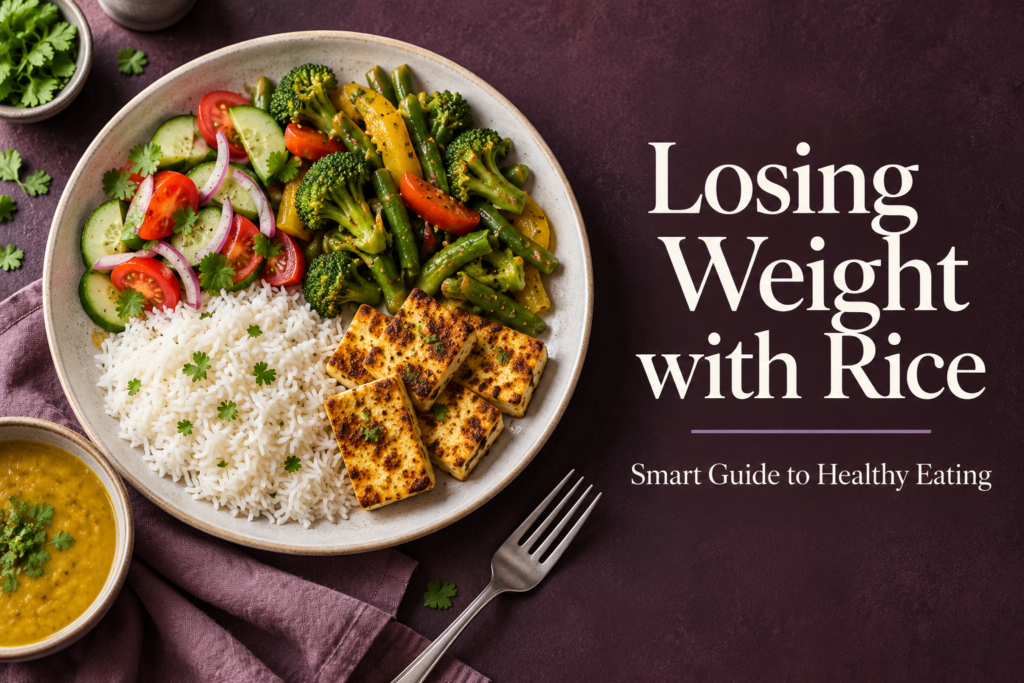
Build the Perfect Weight-Loss Plate
| Part of the Plate | What to Fill It With | Examples |
|---|---|---|
| Half | Vegetables and salad | Leafy greens, bhindi, lauki, beans, cucumber salad |
| One quarter | Protein | Dal, paneer, fish, chicken, eggs, tofu |
| One quarter | Low GI rice | ½ to 1 cup cooked low GI rice |
This simple plate gives you carbohydrates, protein, healthy fats, vitamins, minerals and fibre, without excess calories.
Best Foods to Eat With Rice for Weight Loss
| Combination | Why It Works |
|---|---|
| Dal and rice | Classic Indian meal with carbohydrates and plant protein |
| Grilled chicken and rice | High-protein, balanced option |
| Vegetable curry and rice | Adds fibre, vitamins and minerals |
| Rajma rice | Rich in protein and fibre |
| Chole rice | Plant protein and steady energy in moderate portions |
| Fish curry and rice | Lean protein and omega-3 fats |
| Mixed vegetable sambar rice | Nutritious, filling and light |
Training regularly? Read can you eat rice if you go to the gym and low GI rice vs white rice for muscle building.
Common Mistakes That Slow Down Weight Loss
| Mistake | What to Do Instead |
|---|---|
| Eating large portions | Measure ½ to 1 cup of cooked rice and fill the rest of the plate with vegetables and protein |
| Skipping protein | Add dal, rajma, chana, eggs, chicken, fish, paneer or tofu to every rice meal |
| Using too much oil or ghee | Steam or boil rice, use oil sparingly and choose grilled or lightly sautéed sides |
| Drinking sugary beverages | Choose water, unsweetened buttermilk, lemon water or unsweetened green tea |
| Not being physically active | Walk, cycle, do yoga or strength training regularly |
Quick Weight-Loss Rice Tips
- Switch your everyday rice to low GI rice.
- Measure your rice instead of estimating.
- Add protein and vegetables to every rice meal.
- Keep oil and ghee to a minimum.
- Take a short walk after meals.
Does White Rice Cause Weight Gain?
White rice on its own does not directly cause weight gain. Weight gain happens when calories consistently exceed your body’s needs: oversized portions, oily and sugary sides and too little activity. Switching to low GI rice and keeping portions in check makes rice an easy part of a healthy eating pattern.
Is Brown Rice Better Than Low GI Rice for Weight Loss?
| Feature | Brown Rice | Low GI Rice by Gatti Fit Grain |
|---|---|---|
| GI value | About 68 (medium) | 51 (low) |
| Fibre | Higher (bran layer intact) | Lower |
| Taste and texture | Chewy, nutty | Soft, familiar everyday rice |
| Cooking | Longer cooking time | Cooks like regular rice |
| Family acceptance | Often lower | High: tastes like the rice you already eat |
Brown rice gives you more fibre, while low GI rice gives you a lower GI with the familiar taste and texture your family enjoys, which makes it far easier to stick with every day. Read more: low GI rice vs brown rice.
Why Health-Conscious Families Choose Gatti Fit Grain Low GI Rice
- Tested GI of 51, well within the low GI range
- Helps stabilise blood sugar and keeps energy steady after meals
- Soft texture and familiar taste for every Indian dish, from dal rice to pulao
- Pairs perfectly with protein and vegetables on a balanced plate
- One rice for the whole family, from healthy rice for kids to anyone managing insulin resistance or PCOS
- Easy to buy on Amazon in 2 kg, 5 kg and 10 kg packs
Conclusion
Losing weight does not mean giving up rice. It means making smarter choices: choose low GI rice, measure your portions, and pair it with protein, vegetables and healthy fats, alongside regular activity.
Low GI rice by Gatti Fit Grain helps stabilise blood sugar and keeps your energy steady, so you can enjoy the rice you love every day on your weight-loss journey. Buy low GI rice online on Amazon and make the smart switch today.
Frequently Asked Questions
Can I eat rice and still lose weight?
Yes. Weight loss depends on your total calories, not on cutting out rice. Keep rice to ½ to 1 cup per meal, pair it with protein and vegetables, and choose low GI rice for steadier energy.
Which rice is best for weight loss?
Low GI rice is the smartest everyday choice. Low GI rice by Gatti Fit Grain has a tested GI of 51, helps stabilise blood sugar and keeps the familiar taste of everyday rice.
Is white rice bad for weight loss?
Not on its own. Plain white rice has about 205 calories per cooked cup. Large portions and oily or sugary sides are what usually add the extra calories. Switching to low GI rice and controlling portions makes rice easy to include.
Is brown rice or white rice better for weight loss?
Brown rice has more fibre, but its average GI is about 68 (medium). Low GI rice gives you a lower GI of 51 with the familiar texture of white rice, which many families find easier to stick to.
How much rice should I eat to lose weight?
A practical guide for most adults is ½ to 1 cup of cooked rice per meal, with half the plate vegetables and a quarter protein. Your exact portion depends on your calorie needs and activity.
Can I eat rice at night when trying to lose weight?
Yes. What matters most is your total intake for the day. Keep dinner portions moderate and pair rice with dal, vegetables and protein.
Does low GI rice help with weight loss?
Low GI rice releases energy slowly and helps stabilise blood sugar, which helps you manage hunger between meals. Combined with portion control and activity, it makes your weight-loss plan easier to stick to.
If this guide helped you, we’d love to hear from you. Share your thoughts or questions with us at gattifoods@gmail.com, and we’ll be happy to connect with you.