Explore healthy eating tips, low GI rice benefits, wellness-focused nutrition, balanced lifestyle habits, and mindful nourishment inspiration. .

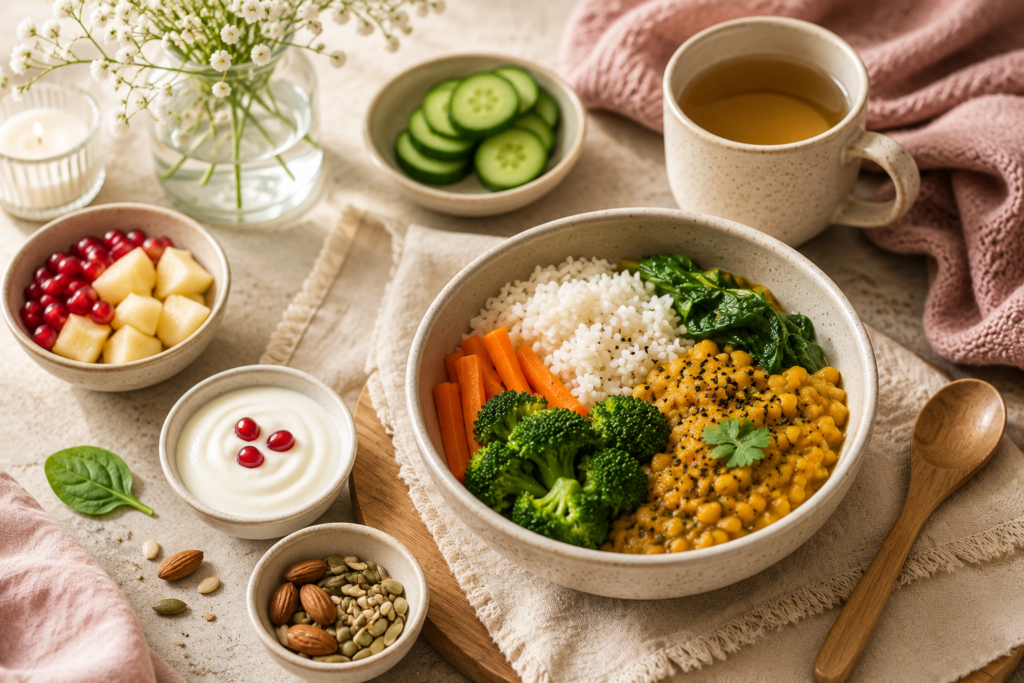
During your cycle, your body often craves foods that feel warm, comforting, and easier to digest rather than heavy or overly processed meals. Many women naturally gravitate toward balanced comfort foods like soups, khichdi, yogurt bowls, and low GI rice meals that support steadier energy and gentler digestion. This shift toward “gentle nutrition” reflects a more sustainable approach to wellness – one that prioritizes nourishment, comfort, and balance over restrictive
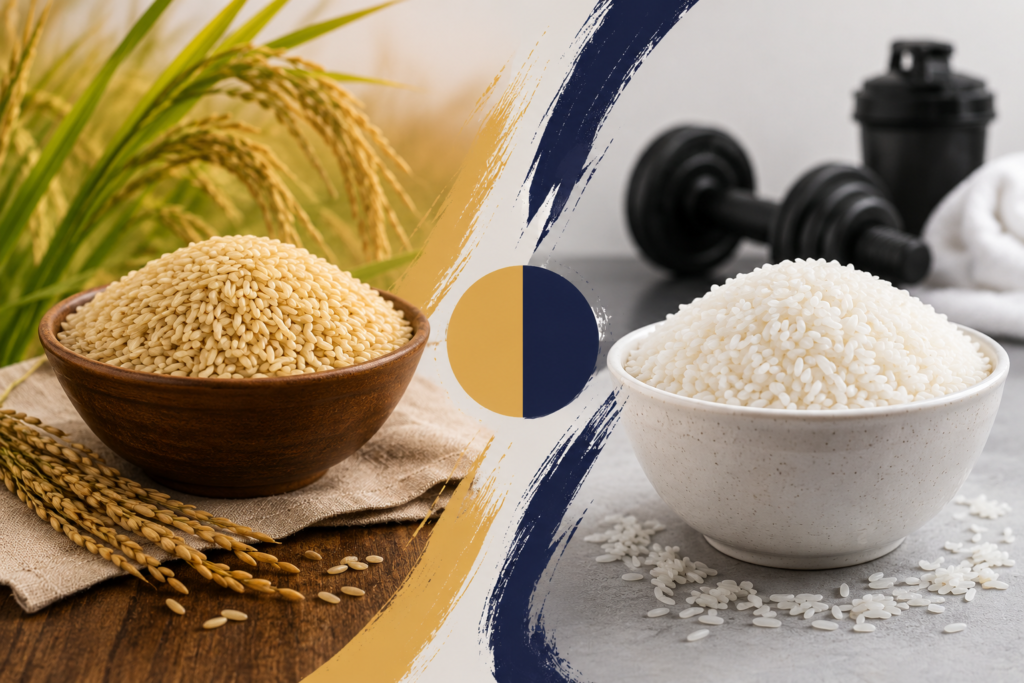
Low GI rice is becoming increasingly popular among athletes and fitness enthusiasts who want more stable energy, better appetite control, and balanced performance throughout the day. While regular white rice remains useful for quick glycogen replenishment and post-workout recovery, low GI rice may support lean muscle goals by providing slower, steadier energy release without frequent crashes or excessive hunger. Modern sports nutrition now focuses not just on eating more carbs — but choosing smarter carbohydrate sources that support long-term performance, recovery, and body composition.
Yes, you can absolutely eat rice if you go to the gym. In fact, rice continues to be a staple in the diets of athletes, bodybuilders, and fitness enthusiasts because carbohydrates help fuel workouts, recovery, and overall performance. The key is not avoiding carbs completely, but choosing balanced meals and smarter carbohydrate options like low GI rice that may support steadier energy, better fullness, and more sustainable fitness habits without extreme restriction.
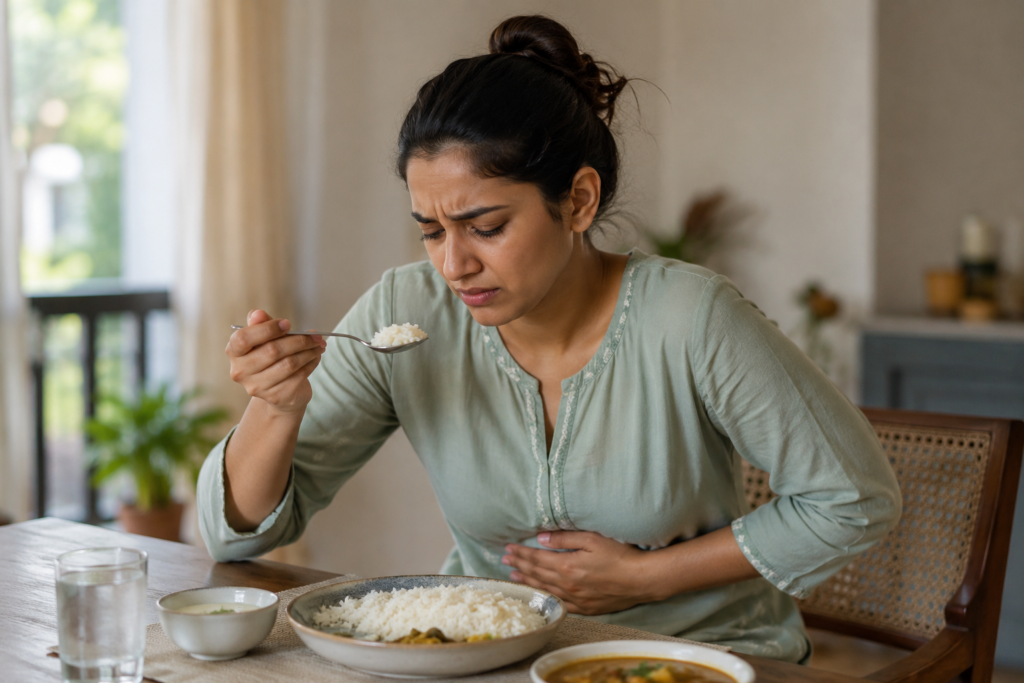
Digestive issues like bloating, acidity, heaviness, and constant stomach discomfort have become increasingly common in modern lifestyles. From ultra-processed foods and rushed eating habits to stress, poor sleep, and sedentary routines, everyday habits may be affecting digestion more than people realize. The good news is that small, mindful food choices including balanced, easier-to-digest meals and smarter carbohydrate options can help support better gut comfort, steadier energy, and healthier daily eating habits.
Hormonal balance plays a major role in women’s energy, metabolism, mood, digestion, cravings, and overall wellness. Instead of completely avoiding rice, many women today are focusing on choosing lighter, more balanced rice varieties like Sona Masoori rice that fit comfortably into mindful eating habits and lower GI meal planning. When paired with protein, vegetables, and fiber-rich foods, balanced rice meals may support steadier energy, improved meal satisfaction, and more sustainable wellness routines for modern lifestyles.
Rice is a staple food in millions of Indian households, but when it comes to blood sugar control and metabolic health, not all rice behaves the same way inside the body. While traditional white rice may digest quickly and cause faster glucose spikes, low GI rice is designed to release energy more gradually, supporting steadier blood sugar response, improved satiety, and more balanced meal planning. Understanding the difference between low GI rice and regular white rice can help consumers make smarter carbohydrate choices without completely eliminating rice from their diets.
Rice is not inherently “good” or “bad” for diabetes. Its impact on blood sugar depends on the type of rice, portion size, cooking method, and the overall balance of the meal. Modern nutrition science now focuses less on eliminating rice completely and more on understanding glycemic response, smarter carbohydrate choices, and balanced eating habits. Lower GI rice varieties, portion awareness, and combining rice with protein and fiber-rich foods may help support better blood sugar management without giving up traditional meals entirely.
White rice is often blamed for weight gain, but the real issue is usually portion size, meal balance, and overall eating habits rather than rice itself. While regular white rice digests quickly and may leave you feeling hungry sooner, low GI rice releases energy more gradually, which may support better satiety, stable energy, and more manageable eating patterns during weight loss. Instead of completely eliminating rice, many people now focus on choosing smarter rice options and building more balanced meals that feel sustainable long term.
Switching to low GI rice alone is not a magic solution for reversing prediabetes, but it can be a meaningful step toward better blood sugar management when combined with healthier daily habits. Compared to regular white rice, low GI rice digests more slowly, which may support steadier glucose response, improved satiety, and more stable energy levels throughout the day. For many people managing prediabetes, small sustainable changes like mindful portions, balanced meals, movement after eating, and smarter carbohydrate choices often make a bigger long-term difference than extreme restriction.
Gatti Fit Grain Low GI Sona Rice is designed for people looking to make smarter, more balanced food choices without giving up everyday comfort meals. Its low glycemic index supports slower digestion and steadier energy release, making it a practical option for balanced eating, blood sugar awareness, and long-lasting satiety. From nourishing breakfast bowls to wholesome lunch and dinner combinations, incorporating low GI rice into daily meals can help support healthier routines in a simple and sustainable way.
Gatti Fit Grain Low GI Sona Rice is designed for people looking to make more heart-conscious food choices without giving up everyday comfort meals. Its low glycemic index supports slower digestion and steadier energy release, which may help maintain more balanced blood sugar and insulin response throughout the day. Combined with mindful eating habits and balanced meals, low GI rice can become a practical part of a heart-healthy lifestyle focused on long-term wellness, satiety, and sustainable nutrition.
Gatti Fit Grain Low GI Sona Rice combines traditional rice comfort with a more balanced nutritional approach designed for modern lifestyles. Its low glycemic index supports slower digestion and steadier energy release, making it a practical option for people focused on blood sugar awareness, satiety, weight management, and overall wellness. Along with its lighter feel and everyday versatility, this rice variety fits naturally into balanced meals that support healthier and more sustainable eating habits.
Low GI rice is becoming a preferred choice for health-conscious consumers because it releases energy more gradually compared to regular high GI carbohydrate sources. This slower digestion may help support steadier blood sugar levels, improved satiety, balanced energy, and more mindful eating habits throughout the day. Gatti Fit Grain Low GI Rice combines everyday comfort with a more balanced nutritional approach, making it a practical option for people focused on wellness, weight management, heart health, and long-term lifestyle sustainability.
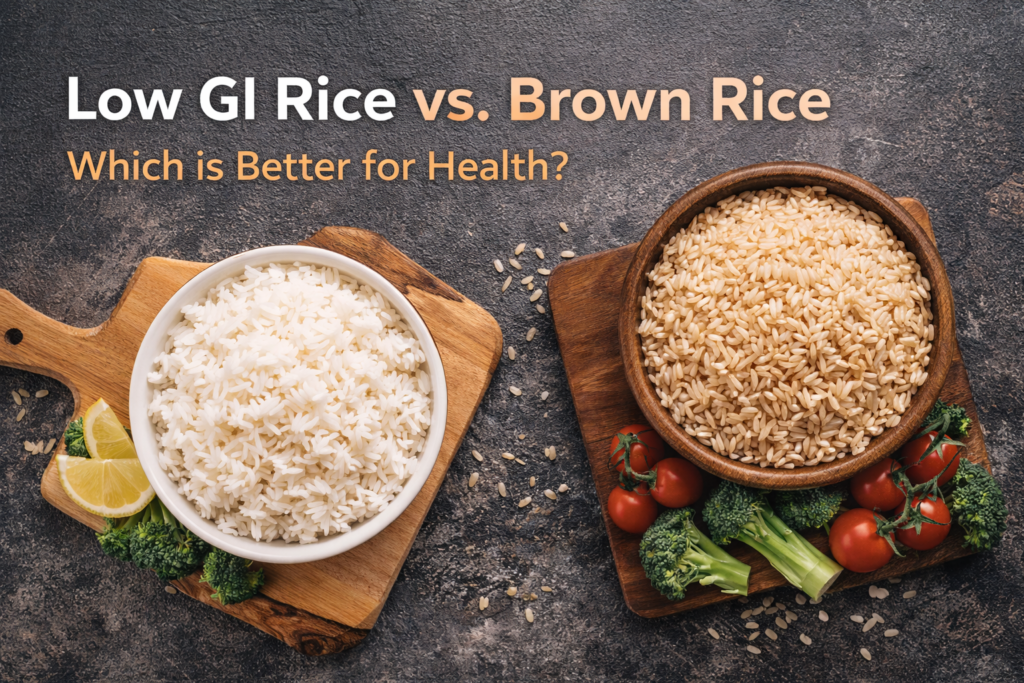
Both low GI rice and brown rice are considered healthier alternatives to regular refined rice, but they support the body in different ways. Brown rice is valued for its fiber and nutrient content, while low GI rice is specifically designed to support slower glucose release and steadier blood sugar response. For people focused on balanced energy, blood sugar awareness, and sustainable everyday eating habits, low GI rice may offer a more practical option without giving up the comfort and familiarity of regular rice meals.
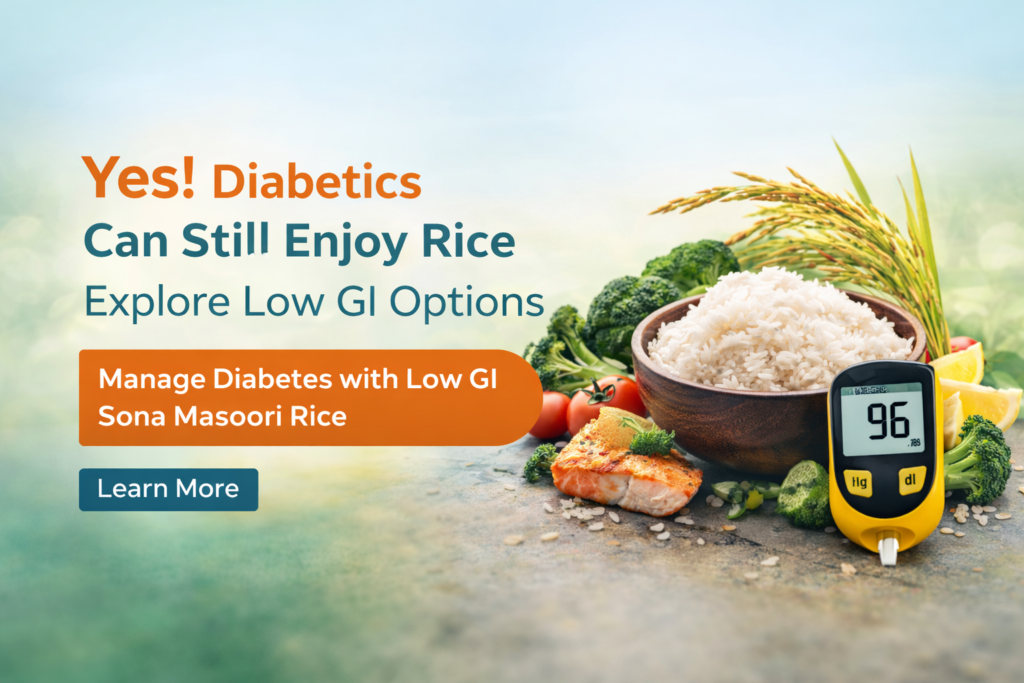
Having diabetes does not necessarily mean giving up rice completely. The key is choosing smarter carbohydrate options and being mindful about portions, meal balance, and overall eating habits. Low GI rice varieties like Low GI Sona Masoori rice digest more gradually compared to regular polished white rice, which may help support steadier blood sugar response and more balanced energy levels. When paired with protein and fiber-rich vegetables, rice can still comfortably fit into a diabetes-conscious lifestyle without feeling overly restrictive.
Choosing the right type of rice can make a meaningful difference for people managing diabetes and blood sugar balance. While regular polished white rice may raise glucose levels more quickly, lower GI rice varieties digest more gradually and may support steadier blood sugar response and improved meal satisfaction. By focusing on balanced portions, fiber-rich meals, and smarter carbohydrate choices, rice can still remain part of a practical and sustainable diabetes-conscious lifestyle.
Switching to low GI rice may seem like a small dietary change, but over time it can influence how your body experiences energy, hunger, and meal satisfaction throughout the day. Because low GI rice digests more gradually than regular white rice, it may support steadier energy release, more balanced blood sugar response, and longer-lasting fullness after meals. While it is not a magic solution on its own, many people find that small, sustainable shifts like choosing lower GI foods can make healthier eating patterns feel easier and more manageable long term.